
Illuminating novel molecular mechanisms of human skeletal muscle insulin sensitivity using personalised phosphoproteomics
PhD defence
Magnus Romme Leandersson
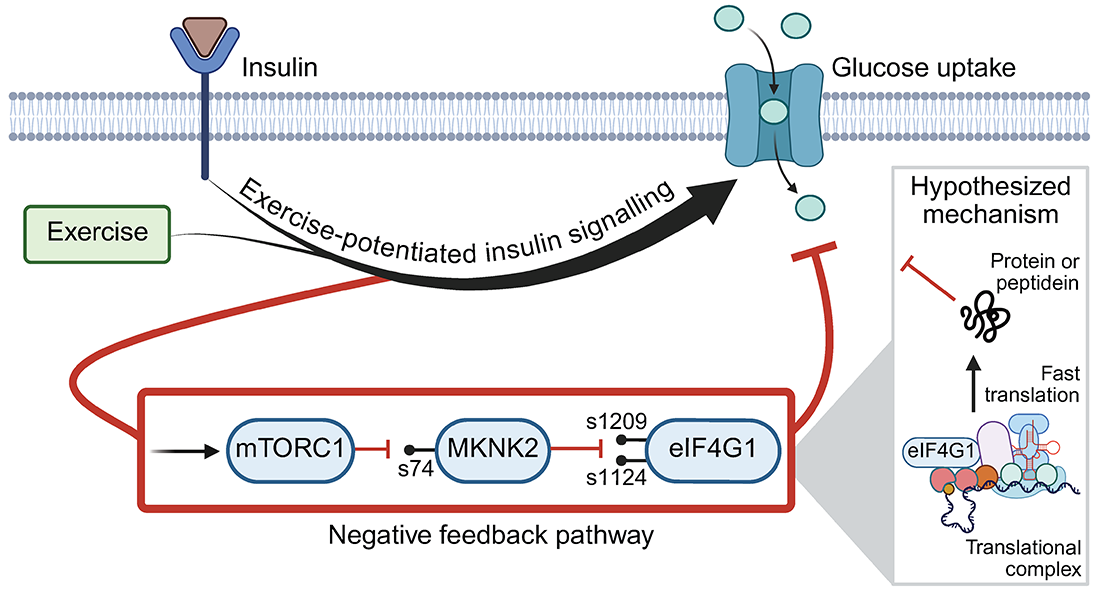
Exercise enhances the effects of the hormone insulin in skeletal muscle, making it a cornerstone for preventing and managing insulin resistance (prediabetes) and Type 2 diabetes.
However, because regular exercise is not always feasible or sustained, developing pharmacological therapies that replicate these metabolic benefits has become a major clinical goal.
Designing such treatments requires identification of the responsible molecular mechanisms.
This thesis applies a state-of-the-art approach termed "personalised phosphoproteomics" to study these mechanisms in human skeletal muscle. The findings uncover key targets that could help transform beneficial exercise effects into a pill.
Assessment Committee
Associate Professor Lasse Gliemann (chair), Department of Nutrition, Exercise and Sports, University of Copenhagen, Denmark.
Professor Anna Krook, Karolinska, Stockholm.
Professor Hadi Al-Hasani, German Diabetes Center, Düsseldorf.
Supervisors
Professor Jørgen Frank Pind Wojtaszewski, Department of Nutrition, Exercise and Sports, University of Copenhagen, Denmark.
Associate Professor Rasmus Kjøbsted, Department of Nutrition, Exercise and Sports, University of Copenhagen, Denmark.
Place
Building: HCØ, Room: Aud 6, Universitetsparken 5, 2100 Copenhagen.
Copy of thesis
Email address to gain access to the thesis: ljp559@alumni.ku.dk.
You will either receive a copy of the thesis or be informed where you can read a physical copy.
Recipients of copies of the thesis are not allowed to share or distribute it due to copyright compliance.